Basic HTML Version


114
TRAVELLER
Now, however, he’s embraced the change, and has opened a
restaurant, art gallery and hospitality venue just 100m from
the stadium.
“The area’s changed dramatically already,” he says.
“They’ve beaten out 250 businesses that were employing
12,000 people. This area was the greatest concentration
of manufacturing land in the whole of London and it was
basically wiped out for three weeks of sport. Now it’s
changing still further, but London is ever changing. That’s
the nature of the beast.
“We think there’s no question that the Olympic Park
will become amajor tourist destination, with the Orbit [the
115m tower] becoming London’s Eiffel Tower, along with
theWestfield Shopping Centre. That side of the park is all
very big brand, high street and corporate. Our side will be
cultural. We sort of see this part of London as being almost
like theMeatpackingDistrict inNewYork – post-industrial,
quite cultural, trendy, arty and a real attraction.”
Similar optimismhas been shared duringmany a dinner
party over the past seven years, with the giddy anticipation
of a new property hotspot. Indeed, NewhamCouncil
recently warned it might have to send council tenants
to Stoke-on-Trent because the local rental market was
“overheated” by the Olympic effect. Unfortunately for local
homeowners and landlords, that’s not quite true. According
to Yolande Barnes, director of residential research at estate
agents Savills, she “can’t see any evidence of a pre- or
post-Olympic price boom”.
Supporting that view is data published by property
analyst firmHometrack, which shows rental rates in E15
(the postcode for Stratford, currently the closest residential
area to the Olympics) have increased at a slower rate than
the Greater London average – and no faster than rent in
non-Olympic areas, such asManor Park or Forest Gate.
Hometrack also revealed that, in 2001, the gap between
values around the Olympic Park and those elsewhere in
London was 30-35%. It’s now 35%. Basically, there has been
no local boom – so far.
“The area has under-performed because of lack of
mortgage availability and tighter credit scoring in what
is basically a second-handmarket in E15,” says Richard
Donnell, director of research at Hometrack. “Clearly, there’s
amassive improvement around Stratford, but none of us
knows how strong the Olympic effect is going to be. How
much of it cascades out? How far does it cascade? Does it
reach amile from the site? It’ll be doing some of that, but I
think a lot of these benefits are quite localised.”
It’s not all doomand gloom, however. Donnell is
optimistic that some parts of the development will be a
resounding success. “Themarket that’s going to be created
in E20 [the new homes on the park] is going to be very
different to the E15market,” he says. “I’m sure the Olympics
will develop into amajor place. It’s just like the Docklands.
That whole area has fundamentally changed, but it takes
about 20 years for that change to come through. The
Olympics is going to be no different. It’s going to be a whole
new place and it’s half-created already. It’s just a question of
the absorption rate and the pricing levels when all the new
houses get built.”
So, which area would he buy in, E15 or E20? He gives his
answer with a chuckle: “I’d buy inWest London.”
We think there’s no question that
theOlympic Parkwill become a
major tourist destination”
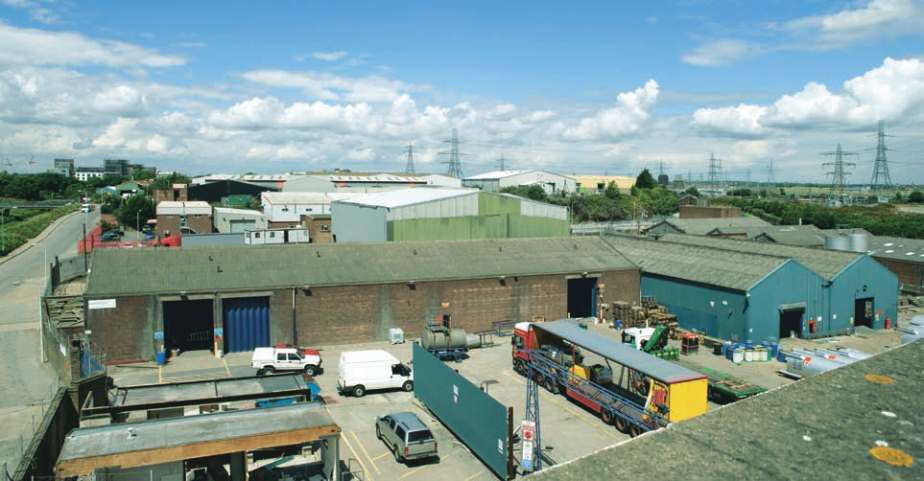
Above,
what the
Olympic site looked
like before it was
redeveloped;
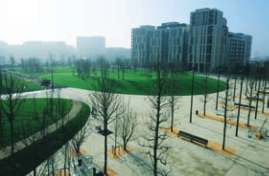
left,
the view from
theAthletes’ Village,
post-development