Basic HTML Version


TRAVELLER
|
51
FEATURES
|
PARIS
1860
Incorporation of
outlying villages,
including Montmartre,
Belleville, Auteuil and
Monceau into Paris
expands the city into
20 arrondissements.
1914-1919
During WWI, the
French government
temporarily transfers
to Bordeaux. Paris is
saved from German
occupation by the
battle of the Marne.
1940-1944
After Paris is shelled
and occupied by
Hitler’s troops, the
French government
relocates to Vichy. In
August 1944, the city
is liberated.
2012
It’s all politics, as
Nicolas Sarkozy does
his best to defend his
presidential seat in the
first round of voting on
22 April. Expect armies
of leaflet pushers.
1852-1870
Baron Haussmann
transforms the city
by razing entire
districts to create wide
boulevards, a sewage
system, gas lighting
and rail stations.
CANAL SAINT-MARTIN
THE NORTH-EAST
BERCY/AUSTERLITZ
BATIGNOLLES
PA R I S
N
500m
GETTING
AROUND
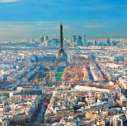
SKYLINE ALERT
Trendy Paris has moved out to the
fringes, where rents are lower. If you
want a bigger helping of the hip and
happening, take the Metro to the end
of the line.
CANAL SAINT-MARTIN
Head here for hot restaurants, such La
Rotonde (
larotonde.com
), a brasserie
in the 1784 waterfront rotunda; movie
theatres; bars and haute-hip fashion/
lifestyle shops like Antoine et Lili
(
antoineetlili.com
). Metro stations
Jaures and Riquet.
THE NORTH-EAST
Nocturnals flock to the Flèche
d’Or (
flechedor.fr
) concert hall for
midnight music and then book
beds at the chic/cheap Philippe
Starck-designed ex-garage Mama
Shelter Hotel (
mamashelter.com
)
opposite. Metro stations Gambetta
and Porte de Bagnolet.
BERCY/AUSTERLITZ
The eastern Seine receives an
overdue dose of style from the Docks
fashion centre (
paris-docks-en-seine.
fr
). Two exhibits – Rei Kawakubo and
Balenciaga – will open here on 13
April. Metro stations Quai de la Gare
and Gare d’Austerlitz.
BATIGNOLLES
Art galleries are multiplying in this
former prole ‘hood in the north-west.
Behind boho façades, insider’s dining
dives like Le Bistral (
lebistral.com
)
serve terrific
terroir
cuisine. Metro
stations Rome and Brochant.
WORDS CORINNE LABALME | PHOTO © SHUTTERSTOCK| MAP ILLUSTRATION © JASON PICKERSGILL/ACUTEGRAPHICS.CO.UK
LOVE PARIS’S SKYLINE?
It may soon
be history. Paris mayor Bertrand
Delanoë has defied a 1977 ruling
which, after the 210m-high Tour
Montparnasse debacle, slapped
height restrictions on city buildings.
Now both Renzo Piano’s plans
for a 160m-tall courthouse in the
Batignolles area and the 180m-high
Triangle Tower, designed by Herzog &
de Meuron, have been approved.
These projects are generating
controversy. The pro-skyscraper
crowd say Paris must not become a
“museum city” and point out that the
300mEiffel Tower was not universally
appreciated when it went up in 1889.
However, Paris’s scenic appeal is
the “sesame” that opens the wallets
of tourists and some urban historians
argue that the city’s skyline should be
given UNESCO Landmark status. “Too
often architects opt for ‘monumental’,”
sighs Olivier de Monciault,
president of preservation group
SOS Paris, “when all that’s required
is a contemporary building that
harmonises with the environment.”