roomconsiderationofheroctogenarianstatusandthe idea
ofcelebratingabodyofworkwhile theartist isstillalive.
ChristopheCherix,theRobertLehmanFoundationchief
curator of drawings andprints for themuseum, also cites
Ono’s “incredible influence” on a younger generation of
artists. “If you lookat theworkofher contemporaries, she
wasextremelyearly,[doing]typesofperformancethatreally
didn’thappenuntilthelate1960sandearly1970s.Shepaved
theway.Ithinkanewgenerationisrediscoveringthat,andI
thinkthepolitical implicationof thosepiecesmakesYoko’s
workextremelycurrent.”
ThecuratorschosetofocusonOno’sworkfromthe1960s
because,Cherixsaid,theywantedtoemphasizetheoriginsof
herpractice.Also,headmits, “thesecondpartofhercareer
eclipsedthefirst,and [many] forgotcollectivelythatbefore
shebegan tomakemusicshewasapioneeringartist.”
Muchof Ono’s earlyworkwas interactive: Shewould
give either verbal or written instructions to viewers,
which she would then encourage them to interpret as
theywished. TheMoMA showwill recreate some of the
more famouspieces, including
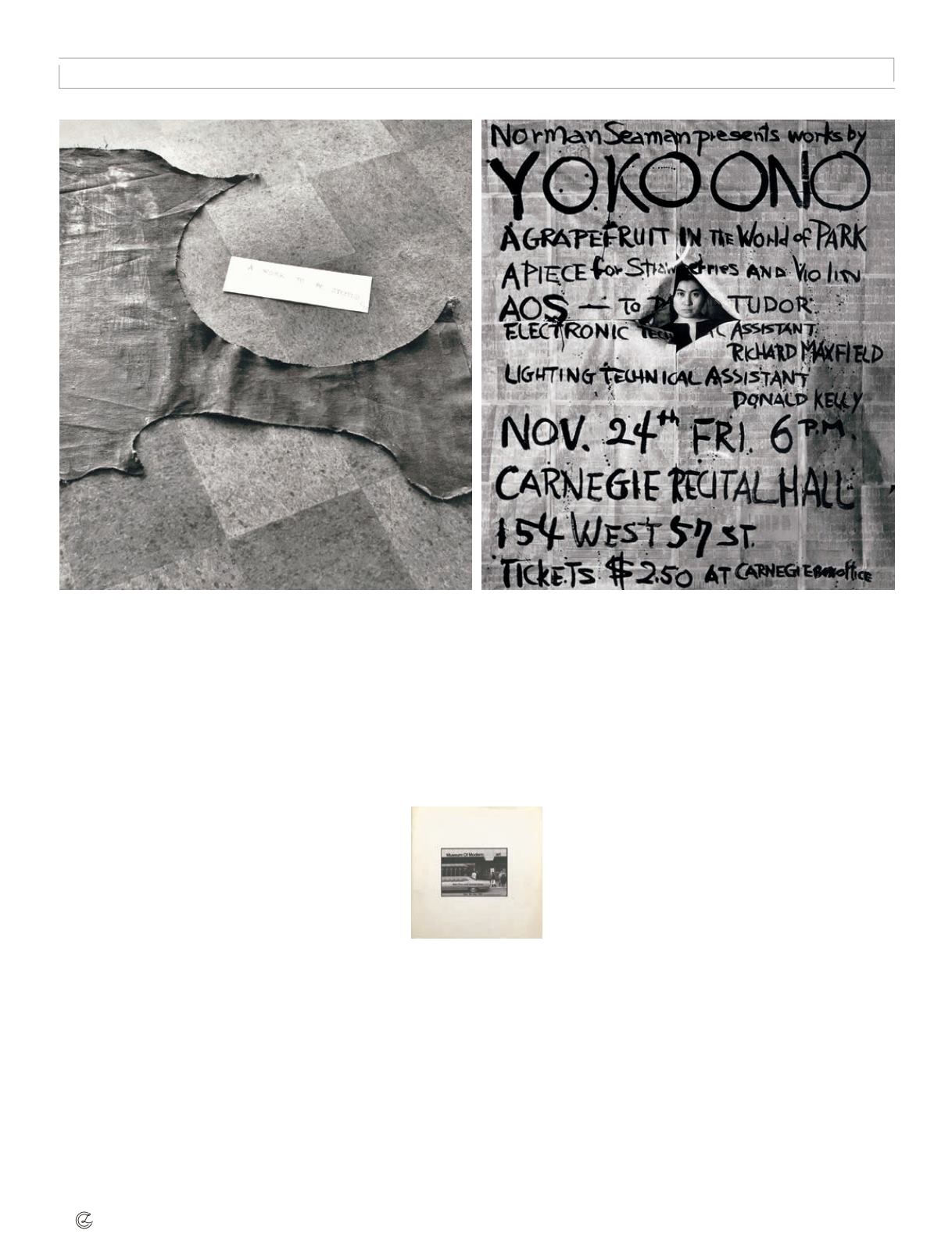
Painting tobeSteppedOn
(1960/61), inwhichsheplacedablankcanvason the floor
and invitedviewers/attendees tostepon it, and
BagPiece
(1964),whichdebutedatCarnegieHall, inwhichperform-
ers climbed into a bag, taking off their clothes, leaving
it up to the audience to figure outwhat theywere doing
inside. The current plan is thatMoMA stafferswill help
willingparticipants into thebag (nowordyet on rulesof
conductorclothing/dresscode inside). “Whenyouenter
thebag, youperformaworkofart.Youcanperform itany
way youwant.We reallywant people tounderstand it is
not agame,”explainedCherix.
Whethervisitorswillplayalongornotremainstobeseen,
butthelackofcontroloftheoutcomewasahallmarkofOno’s
workduringthisperiod.Justonereasonwhyitremainsfresh
andengagingsome50years later.
culture
“YokoOno: OneWoman
Show, 1960-1971” is on view
throughSept. 7; Moma.org
y
okoOno took the stageat
YamaichiConcertHall in
Kyoto, knelt and invited
theaudiencemembers to
comeonstage,onebyone,
and cut off a small piece
ofherclothing—until all
thatwas leftwas her un-
derwear.
Theartistprovidedthe
scissors, andparticipants
wereallowedtokeepwhat-
evertheysnippedoff.Even
by today’s standards, it’sa
pretty radical piece and
onethatputtheartistinapositionofincrediblevulnerability.
But
CutPiece
didn’tdebutthisdecade,oreventhiscentury.
Onofirst performed it in 1964– inJapan, no less, andas a
Japanesewoman. To say it challenged all sorts of societal
notions issomethingofanunderstatement.
Manyaren’tawareof theexistenceof thispiece,oreven
thatYokoOnohadaprolificandcriticallyacclaimedcareer
asanartistprior tomeetingJohnLennon in1966.Heonce
describedher as the “world’smost famousunknownartist
– everybodyknows her namebut nooneknowswhat she
actuallydoes.” “YokoOno:OneWomanShow, 1960-1971,”
whichopens at TheMuseumofModernArt inNewYork
CityonMay 17,will bea tripdownmemory lane for those
whowereawareofherworkwhilealso introducing legions
of others to thenow82-year-old’s earlyartisticendeavors.
CutPiece
is justoneofabout125ofOno’sobjects,workson
paper,installations,performances,audiorecordingsandfilms
thatwillbeondisplayatthemuseumthroughSeptember7.
Whynow?Amultitudeofreasons,includingthemuseum’s
acquisition,severalyearsago,ofalargeprivatecollectionthat
included100ofOno’sworks,aswellastheelephant-in-the-
PREVIOUSPAGEANDTHISPAGETOP:PETERBUTLER; INSET: JOHNWRONN
CELEBRATED LIVING • SPRING 2015
52


