BUCKLEUP
MARI TEFRE/GLOBALCROPDIVERSITYTRUST
TheDoomsday
Vault
and theNorwegiangovernment, thevault iswildly
successful, with seeds from nearly every nation
deposited since the opening in 2008. Fowler,
GlobalCrop’sexecutivedirector, turns tohiscom-
puter and checks the deposits: By this month,
nearly 750,000 crop varieties will be stored at
subzero temperatures—everything fromstaples,
like riceandwheat, to theediblehibiscus.Armenia
andTajikistanare sending samples thisyear, as is
theU.S. (backingup itsownbackup seeds). Thai-
landwas racing to save rice samples for thevault
when floods inundated its seedbanks. “Itmaybe
too late for those seeds,”Fowler says.
Whyworry about one kind of seed? Because
diversity in seeds helps crops resist pests and
disease, survivedroughtsand floods, andadapt to
climatechanges.OurStoneAgeancestorsbegan
nurturing that diversity by domesticating plants
around 10,000 B.C. Nowwe need new varieties
that consume lesswater, lessenergyand less fer-
tilizer. “This is themostsevere threat inagriculture
we’ve facedgoingback 12,000 to 15,000years—
andwe arenot ready for it,” Fowler says, getting
to the scarypart.
Consider, he says, the lowly Lathyrus and
the phenomenon of human “crawlers.” (This is
where my teenagers got interested.) Lathyrus,
a relative to the sweet pea flower, has tons of
protein, doesn’t need fertilizingand inplaces like
Ethiopia, Somalia, IndiaandBangladesh is the last
plant standing in a drought. Trouble is, Lathyrus
containsaneurotoxin that increases insevere low-
waterconditions.Eaten for too long, itcausesper-
manent paralysis in the legs of its victims (hence
the awful term “crawlers”). But what if scientists
bred it with less-toxic varieties from the vault?
“Thesecollections,”Fowler argues, “are themost
important natural resourceonEarth today.”
The seed vault is not a tourist attraction. It’s
a tunnel built into amountain in a remote polar
region, withmetal shelves holding aluminum foil
pouchesofseeds.ButFowlersayswalking into the
seed room isanemotional experience forhimev-
ery time. “You realizenoother roomcontains this
much biological diversity created and nurtured
byour ancestors. It’s anunbroken chain from the
Neolithicage.”Hestaresatmeover theSkype line.
“It’sour responsibilitynot tobreak that chain.”
When he signs off, I can’t help but think one
thing: The“DoomsdayVault”maybeaptlynamed
after all.
CIRCLINGABOVESPITSBERGEN,
Norway, about
800miles from theNorthPole, youcan lookdown
andsee thedoor towhat somecall theDoomsday
Vault. The setting is austere— not a tree in sight
— but also beautiful, with snow slathered like
cake frosting on themountain below. Seen from
a plane, the vault looks like no big deal; just a
metalbox juttingout fromanArcticmountain.But
behind its door, deep in theArctic permafrost, is
theSvalbardGlobal SeedVault, theworld’s safe-
deposit box for seeds — an insurance policy for
our food supply.
The man behind the Doomsday Vault is
Tennessee-bornCaryFowler.WhenFowler pops
uponmySkype screen for a chat fromhisRome
office, he doesn’t look like a guywho thinks the
world iscoming toanend.Hewearsahaloofcurly
reddishhairandagentlesmile.Butyouknowwhat
they say about appearances being deceiving …
becausewhenhestarts talkingabout the threat to
theworld’s seeddiversity, he sounds scary— just
not in thewayyou’d thinkat first.
“We’renotabunchofpeoplestandingaround
with signs that say, ‘Repent! The end is near,’ ”
he says reassuringly. Instead, think of the vault
as he does — as a Noah’s Ark for agriculture, a
place to store backup seeds in case of local civil
strife or natural disaster. Stress local. “Wewere
not thinking that theworldwas headed to some
global catastrophe, despite theMayan calendar
stuff,” headdswryly, referring to theapocalyptic
predictions surrounding thedateDec. 21, 2012.
During the war in Iraq, for instance, looters
sacked the national seed bank located in the
Baghdad suburbofAbuGhraib. Luckily, Iraqi sci-
entistshadsentbackups to the international seed
bank inAleppo, Syria,before thewar. Thoseseeds
helped Iraq rebuild. Now, in a twist of fate, the
Syrianseedbank itself is indanger fromcivil strife.
The Global SeedVault inNorway is, by com-
parison, a backup for all nations. Just like a bank
vault, depositors control their own seed samples.
Runbyapartnershipbetween theGlobalCropDi-
versityTrust, theNordicGeneticResourceCenter
WanttotalktoCathy?
Reachher at
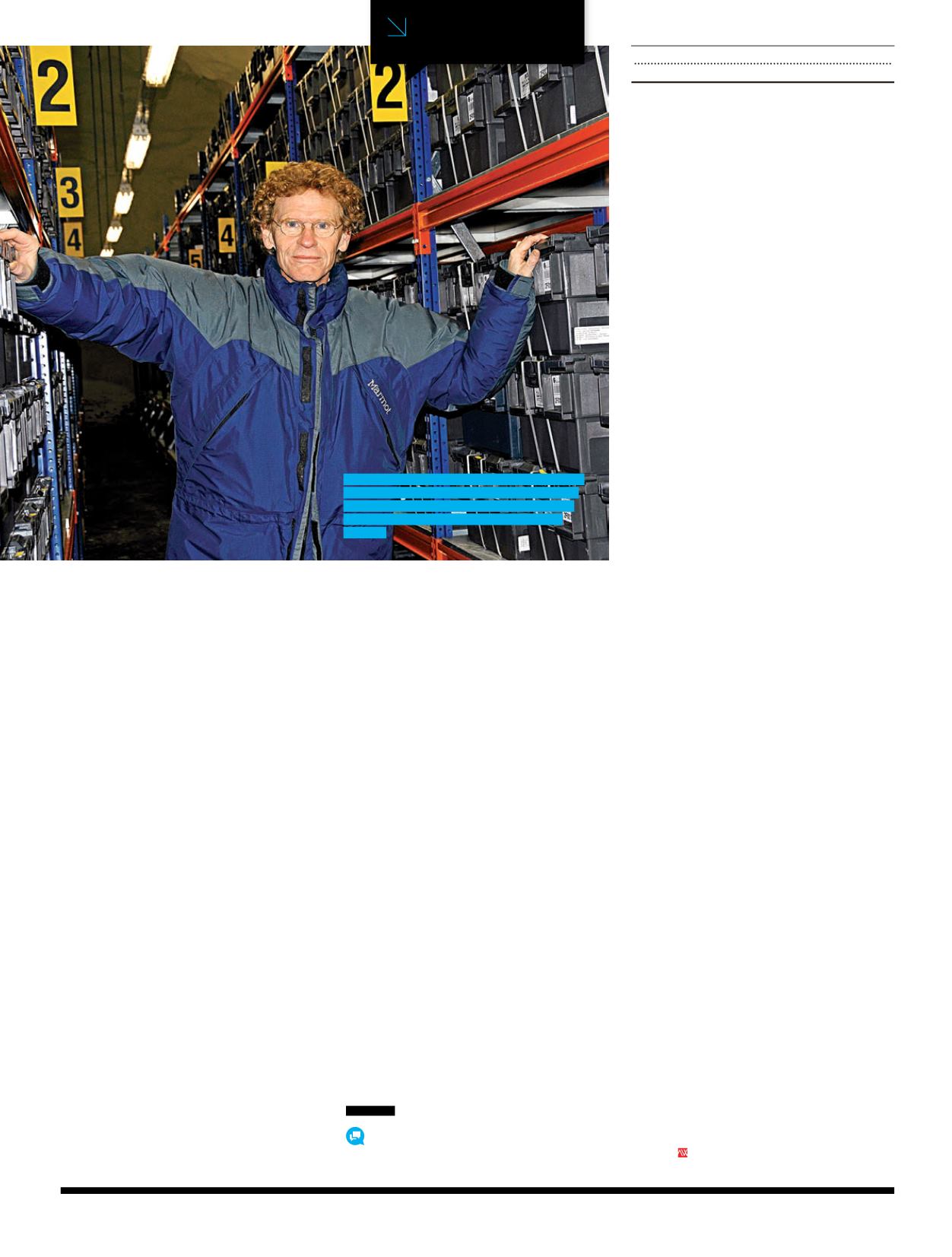
BEPREPARED:
CaryFowler, executivedirector
of theGlobal CropDiversityTrust, surrounded
by shelves stackedwithboxesof seeds in the
SvalbardGlobal SeedVault inSpitsbergen,
Norway
90
APRIL 15, 2012
AA.COM/AMERICANWAY


