NOVEMBER 15 2009
AMERICANWAY 87
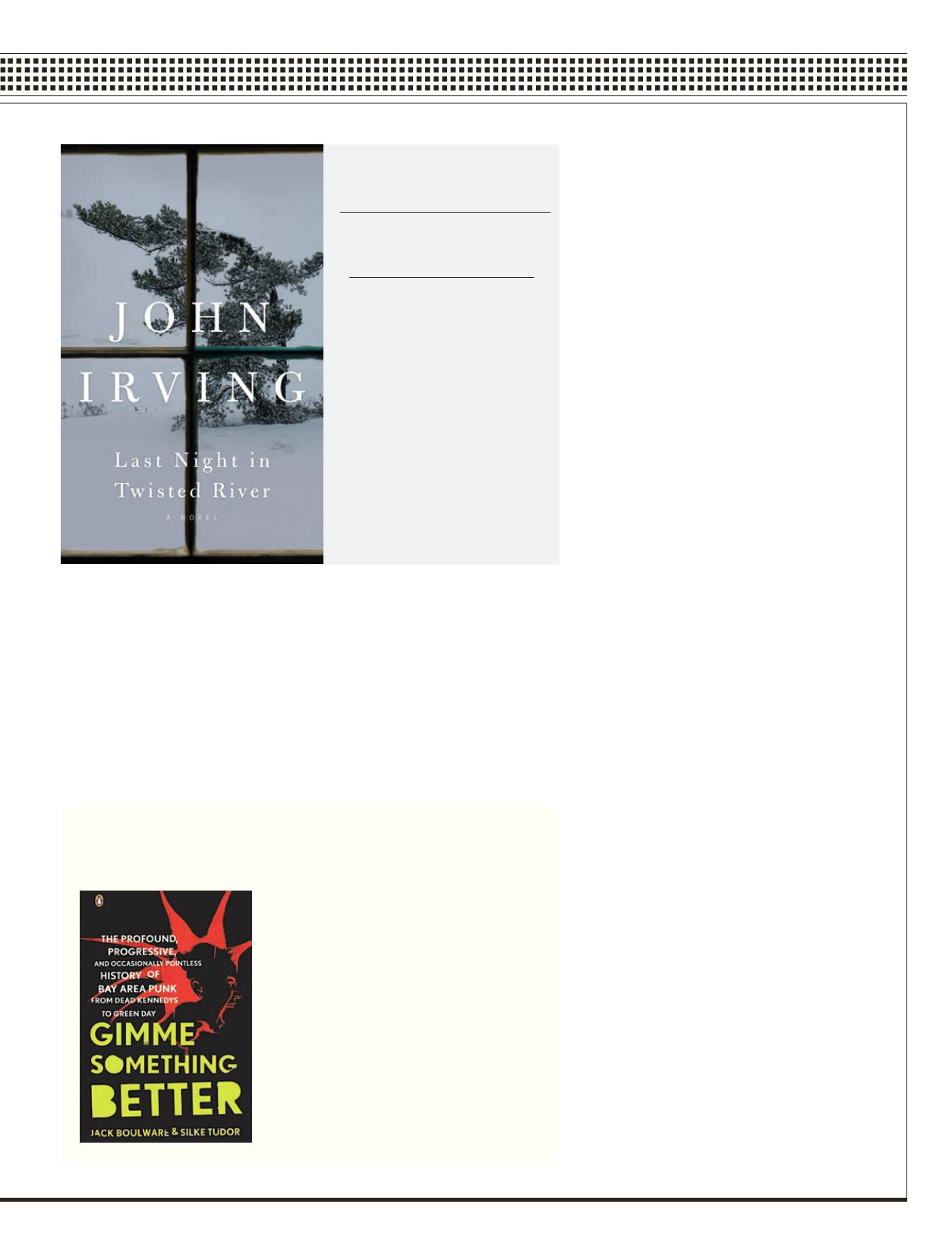
John Irving’s
novels always
have elements
of real life in
them, and
his latest work,
Last Night in
Twisted River
,
is no exception.
By J. Rentilly
Truth in
Fiction
It Is not only In
TheWorldAccording To gArp
that we are all terminal cases. So it is
as well in the world according to author John Irving, the 67-year-old novelist and Oscar-winning
screenwriter behind someof ourmost belovedbest sellers, including
APrayer forOwenMeany
,
The
Hotel NewHampshire
, and, of course,
TheWorldAccording toGarp
. And inhis tomes, appropriately,
stories and storytelling are the only things that can save lives.
Irving’s numerous works have earned him a devoted following of readers, and these fans will
undoubtedly love the New Hampshire–bred writer’s latest novel,
Last Night in Twisted River
. The
book is rich with Irving trademarks: sudden accidents, absent parents, unexpected couplings, and
vivid characters. KurtVonnegut,whowas a real-life friendof Irving’s, evenappears in thepages.We
chattedwith Irving about the autobiographical nature of hiswork, fear, and the life of awriter.
so much of your work feels autobiographical. Where does
the truth stop and the fiction begin?
Well,
Twisted River
is
not autobiographical, not at all to the degree that [my previ-
ous novel]
Until I Find You
was. Jack Burns, [the protagonist
of
Until I Find You
,] was the closest I have come to writing
aboutme.
there’s awonderful inevitability tomuch of
Twistedriver
’s
action.
The reader knows, almost from the beginning, what’s
going to happen: The cowboy is coming after the father and
son; he’s going to find them. No one can keep the father safe
forever. Of course, for awriterwhowrites last sentences first,
likeme, who always knows the ending— all of my novels are
a little bit inevitable, but this one feels more inevitable. You
know the shootout is coming at the end.
your novels, at least since
garp
, have been about stories
and storytelling as much as anything else.
Twisted river
is no different, as the novel we read is revealed to be the
story our protagonist will eventually write.
I’ve written
several novels about writers.
Twisted River
is also about the
process of becomingawriter. It’s a subject I knowprettywell.
Itwouldn’t surpriseme if themain character inhowevermany
novels I have remaining towrite is
always
awriter.
It feels like everything is out to get us in theworld accord-
ing to John Irving: man, machine, nature, and animal alike.
HermanMelvillewrote: “Woe tohimwho seeks toplease rath-
er thanappal!” Toappall is good storytelling. I try toappall. To
write about what you fear is also a little autobiographical—
even ifwhat you fear hasnever happened toyou.When I start
anovel, I try to createa situation I
never
want tobe inmyself.
If the situation scares me, even to think about it — well, I
know that’s a good start.
In 2000, you won an oscar for writing the screenplay for
The cider house rules
. Will youwrite another?
I have four
screenplays inprogress. Idon’tknow ifanyof themwill everbe
made. It’smuch easier towrite a screenplay than it is towrite
a novel, but it’s not easy to have an intelligent film produced.
Thewrittenword, andwhat the author wants and intends to
say, is still sacred tobookpublishing;writersdon’tmatter very
much to the movie business. So I put less and less time into
screenplays now. I do patmyOscar on its gleamingbald head
when I leavemy office at the end of aworkday, and I remem-
ber that thefilmof
TheCiderHouseRules
was as gratifying to
seemade as seeing any novel ofmine published.
What is one thing we would be surprised to know about
John Irving?
In the courseof anormalworkday, I spendmore
timewithmydog than I spendwithotherhumanbeings.Writ-
ing is solitary work; if you’re going to be a writer, you better
like being alone. “Works of art are of an infinite solitariness,”
Rainer Maria Rilke wrote, and he was a poet. If he thought
poetrywas lonelywork, he should have tried being a novelist!
Editor’s Choice
We dIg
San Francisco
,
and for a brief period in
junior high, we thought
we could pull off the
punk-rock look. (We
couldn’t.) Those are
onlya coupleof the rea-
sons why we’re excited
to check out
Gimme
Something Better: The
Profound, Progressive,
and Occasionally Point-
less History of Bay
Area Punk from Dead
Kennedys to Green Day
(Penguin, $18). The
book features hundreds
of firsthand accounts
of the rowdy music
genre’s evolution from
the people who lived it,
including Green Day’s
Billie Joe Armstrong,
AFI’s Davey Havok, and
NOFX’sFatMike.Anoth-
er reason we’re excited
is frequent
American
Way
contributor Jack
Boulware coauthored it
(alongwithSilkeTudor).
Rock on.


