46 AMERICANWAY
JULY 1 2009
T
M T
H
A
H
E
N
E R
W E A
Naval Air Station (now closed) inBermuda
and theNationalOceanic andAtmospheric
Administration (NOAA) High Seas NWS
Service. These official agencies wanted to
get the “ground truth” fromHerb—what
were the winds, the sea conditions? He
providedup to 14,000 reports a year to the
NOAA.Herbgot thedata from scouringall
available weather forecasts; there was no
Internet then. His best sources for condi-
tionswere the sailors themselves.
Herb would provide the service seven
days aweek, often talking to90boats aday,
guiding them through the Atlantic waters.
Eachtimetheycheckedin,heaskedwhatthe
conditions were at their location and then
included the data to update his forecasts.
Times have changed since then. Fore-
casts are now easily downloadable from
the NOAA. E-mail and sat-
ellite phones allow boats to
communicate directly with the
National Weather Service and
the National Hurricane Center
and to receive data instantly.
Several people now provide a
similar service to the oneHerb
pioneered,buttheyoftencharge
money for the information.
However, the computerized
forecastsmost sailorsdownload
are still very simplified, are of-
ten several hours old, andneed
tobe interpretedwitha trained,
experienced eye. That’s why
Herb is still onwatch.
“Theremay be some convec-
tion activity around; theremay
be a trough in the area that’s
not being picked up. And that
is where I come in,” Herb says.
“The peoplewho talk tome are
theoneswho’ve talked tome for
20years—because theyknow I
donot give themwhat they can
alreadyget.”
Most72-year-oldswould
be content to relax and putter
around the house. But Herb is
definitely
not
likemost septua-
genarians. Incredibly, he cus-
tomizes a weather forecast for
each and every boater he talks
to.Hedownloads rawdata from theNOAA
and other weather services throughout the
world, interprets that information hour by
hour, and thencomesupwithadetailedmi-
croanalysis for every sailor.
Sevendays aweek,Herbgives eachof his
boats a four- or five-day forecast. And ev-
ery day, he asks each boat how accurate he
was for that day and then revises the next
forecast.
“I usually sit down at noontime to start
lookingatall the information, downloading
themost current data, and then I start do-
ingmyanalysis.”
Around three o’clock, Herb finishes ana-
lyzingweather patterns.He looks at his log
to seewhichboats are still on thewater and
if any new boats have checked in. Sailors
know that theymust call between3:30and
to continue cruising the Caribbean for six
months before returninghome. Itwas dur-
ing this time that Herb became obsessed
withweather and forecasts. After following
a local amateur radio operator’s suggestion
to get a ham (amateur) radio license, Herb
startedgivingadviceandassistance toother
sailors in the area. Eventually, hemoved to
amarine sideband frequency.
“Basically, Iprovidedasourceof informa-
tion that in those dayswas really not avail-
able to the average sailor,” Herb explains.
“I was the only person. There were profes-
sional services, butnobodycouldaffordone
unless they were large shipping companies
orunlessyouhadveryexpensiveequipment
todownloadNavy facsimile charts.”
Herbwas based inBermuda at the time
and began working together with the U.S.
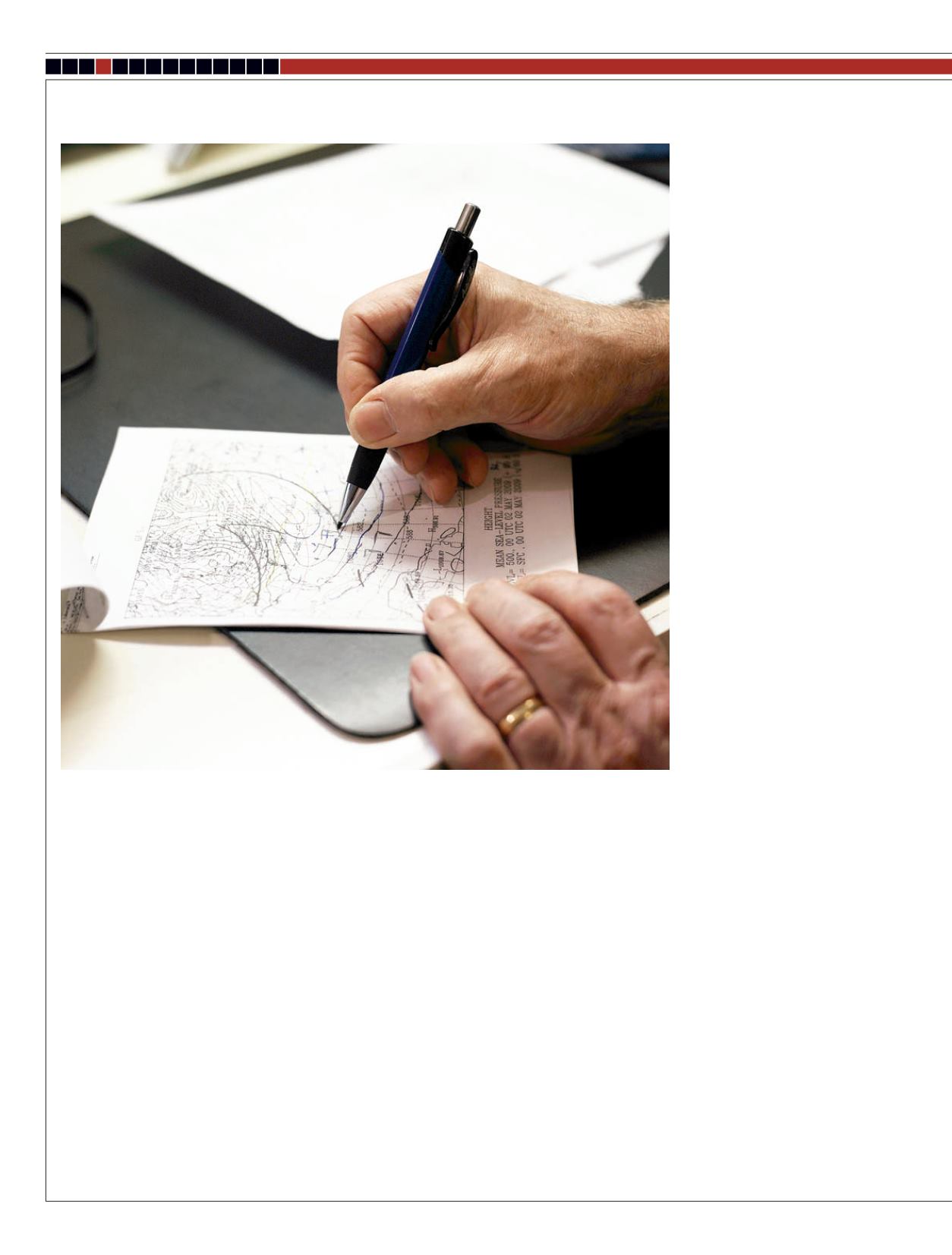
Herbanalyzes rawdatausing
NOAAandother numerical
forecastmodel data.


