Books
56 AMERICANWAY
JANUARY 1 2009
BRITISH CHEF HESTON BLUMENTHAL IS
known for his kooky culinary combinations such
as Sardine-on-Toast Sorbet and Hot and Iced Tea,
which is split vertically in a glass and meant to be
sipped at once. Sensory mix-ups like these helped
his Berkshire, England, restaurant, the Fat Duck,
earn three prestigious Michelin stars in 2004, just
nineyearsafter it opened, a featpracticallyunheard
of in the restaurant industry.
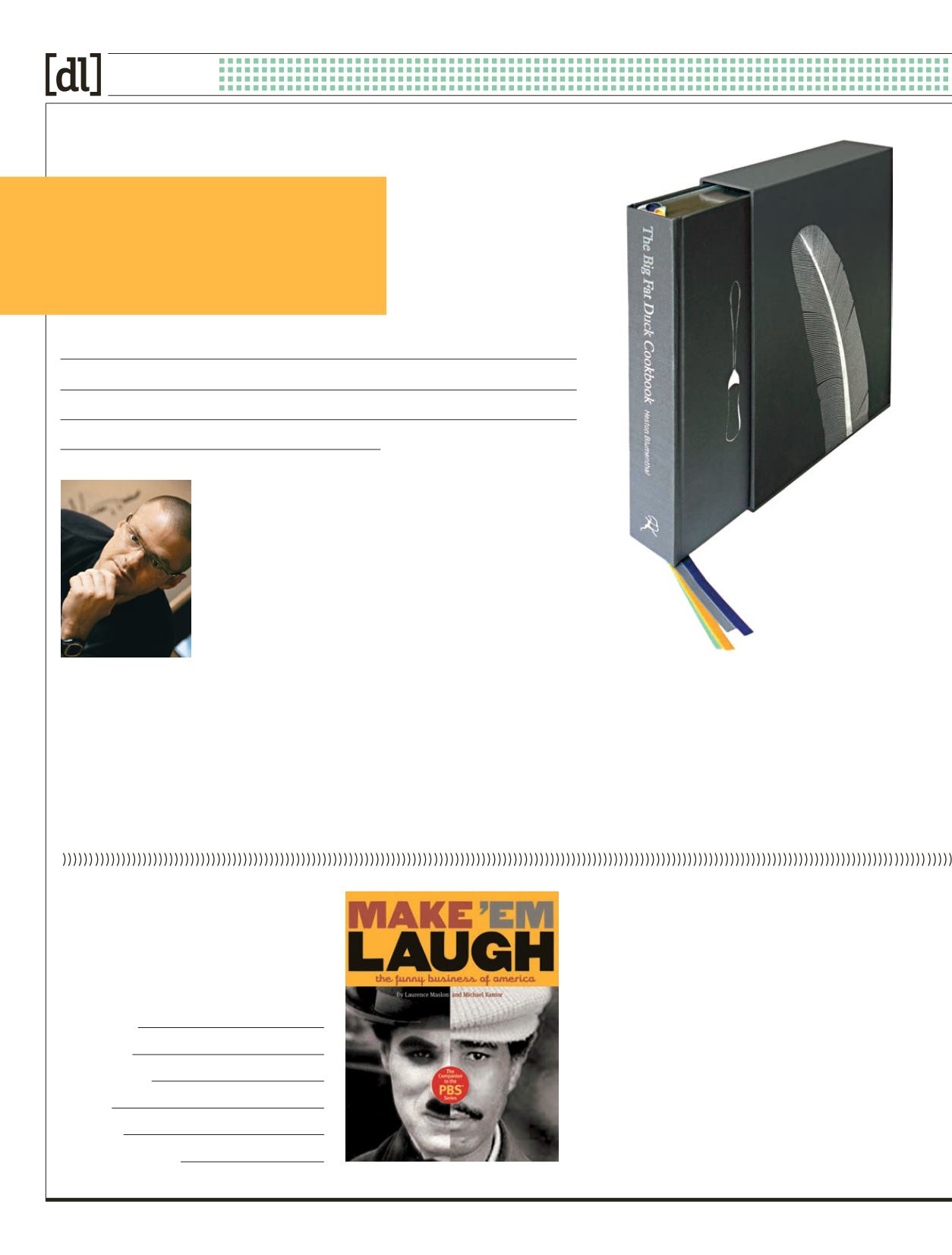
In his new book,
The Big Fat Duck Cookbook
(Bloomsbury, $250), Blumenthal reveals the alchemical secrets behind those sig-
nature dishes as well as “the hurdles and the dead ends” he conquered to arrive
at them. Blumenthal believes there is a science to good food, and he generously
shares his findingswith readers.
He knewhehad tooffer somethingbeyondmere recipes and stunningphotog-
raphy (which, tobe sure, he’s includedplentyof) to justify suchahefty fee.Andhe
doesn’tdisappoint. The self-taught chef beginswithanautobiography inwhichhe
highlights a seminal diningmoment in his life: ameal at L’Oustau deBaumanière
in the Provence region of Francewhen hewas 16. He also spotlights 20 experts
IT WAS EARLY 2004,
and the heated November presidential
election was inching closer by the day. Michael Kantor and
LaurenceMaslon had just wrapped the PBS documentary se-
ries about the history of New York theater called
Broadway:
The American Musical
, and they realized that America was
tense. “There was something about the moment in time and
the countrybeingpolarized thatmademe think, ‘We coulduse
a good joke right now,’” Kantor says. Better yet, he thought, a
century
of good jokes.
So Kantor andMaslon set about chronicling the history of
humor in the United States for a new book,
Make ’Em Laugh:
The Funny Business of America
(Twelve Books, $45), and its
accompanying six-part documentary series of the same name,
whichwill air onPBS inJanuary. Theduogaveus the scoopon
their entertaining newproject.
It’s time togoback to school with chef HestonBlumenthal,
who teaches readers the history, the science, and even the
psychology behind his cuisine in a new cookbook that has a
big, fat price tag. ByNatalieDanford
The$250
Cookbook
LAUGH
TRACKING
whom he consults often
when crafting
his cuisine; they range
from a perfumer
to a psychologist to the
head of the UK Syn-
aesthesia Association.
Another section of the book
deals with some of the
specialty equipment found in his
kitchen, including a lab-grade
centrifuge used to create choco-
latewine.
But Blumenthal doesn’t expect
readers to invest in cen-
trifugesof their own. Instead, heoffers
practical applications for
his esoteric techniques. For example, he
points to “ice filtration”
— freezing chicken stock inaflat sheet and
then letting the block melt
through a perforated tray — a process he claims yields “the most clear con-
sommé you’ve ever seen.”
Blumenthal’s cerebral study has impressed upon him the notion that human
connection and nostalgia are essential to the enjoyment of food — hence his
own yearning to one day return to the courtyard of that Provençal restaurant
of his youth.
“We’ve got more tools today,” Blumenthal says, “but the general emotional
drive to cook great food is still the same as it’s always been.”
Apair of authors takes
a look at thewhat, why,
and how of American
comedy in a newbook and
companion documentary.
By JennaSchnuer


