34 AMERICANWAY
JULY 1 2007
WH A T ’ S I N S T O R E
BIllBAss
was looking foranew challenge.Hehadalreadyhelpedusher in theubiquityof
online shopping—first as senior vicepresident of e-commerce forLands’ End and then as
vice president and generalmanager of Sears CustomerDirect (after Sears, Roebuck&Co.
purchasedLands’ End in2002).He left Sears inMarch2005, andwhenhe and several of
his formercoworkersgot togetherandwere shooting thebreeze,RobertBehnkementioned
the fair-tradecoffeeshehad tried.Andbeingaguywhohadworked in theapparel industry,
Behnke saidhewanted fair-trade clothes too.
“So, that’swhatwedecided todo,” saysBass.
Not that itwas thateasy. It took18months,but thenBasswascofounderandCEOofFair
Indigo, a company inMiddleton, Wisconsin, with 30 employees, 25 of whom are former
Lands’ End coworkers. (Behnke is a cofounder and the vice president of merchandising.)
Their team spent more than a year looking for factories that not only could provide the
kind of volume the company would need but also could adhere to fair-trade principles.
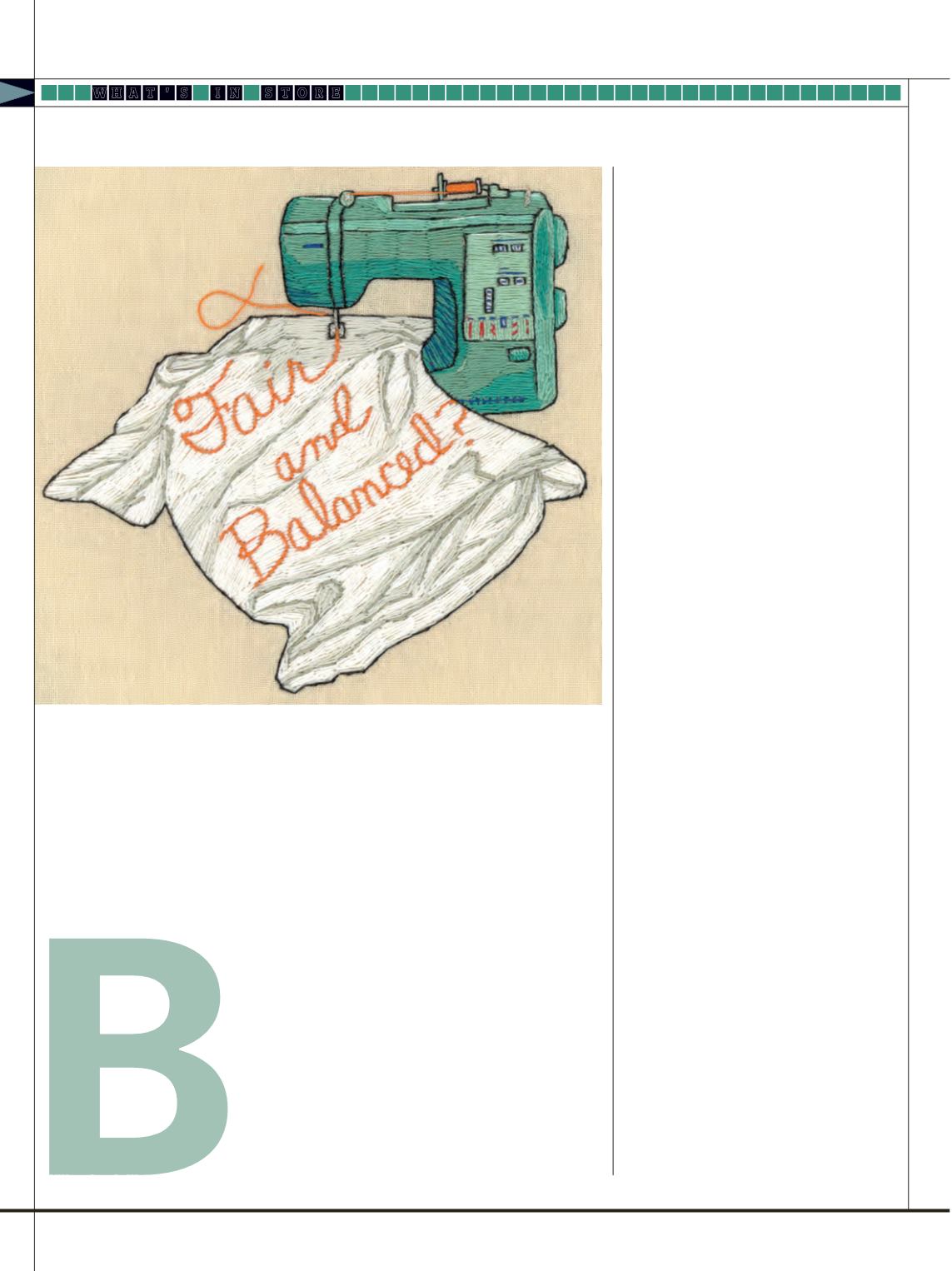
FairDeal
Is it possible to change theworldonepair of chinos at
a time?Anew cropof businesses think fair-trade
apparelwill beas good for companies as it is for the
conscience.
ByMargaret Littman
Bass says that one factory they approached
did not respond because they thought it,
this idea of paying workers more, must be
part of an Internet scam. In September
2006, Fair Indigo’sprint catalogandonline
businesses opened. InNovember, it opened
its first retail store inMadison,Wisconsin.
Fair Indigo’s clothes are designed to appeal
to men and women of ages 30 to 55. The
linen jackets and cashmere sweaters, if you
didn’t know better, could be mistaken for
thoseavailableatAnnTaylororLands’End.
There are none of the
Ugly Betty
ponchos
that come tomindwhenonehears the term
fair trade
.
Fair Indigo nowworks with 25 factories
across the globe; some specialize in skirts,
others in sweaters. Bass says Fair Indigo’s
business model of selling directly to cus-
tomers, through catalogs, the Internet, and
its own boutiques, as opposed to selling
through national retailers, keeps overhead
lowenough that it canafford topayworkers
at its factoriesmore. BecauseFair Indigo is
aprivatefirm,Basswillnot release salesfig-
ures, but he says the company is on track to
turnaprofitwithin four years, a time frame
analysts say is in line for new apparel com-
panies, fair tradeornot.
Defining
fair trade
has been one of the
challenges for companies like Fair Indigo
thatwant to gomainstreamwith a concept
many still see as existing only in the mar-
gins. At its most basic, the term indicates
that the people who create the product are
paid a living wage and have decent work-
ingconditions.Someexpand thatdefinition
to include having the right to unionize and
access to health care. Others, including the
Fair TradeFederation inWashington, D.C.,
limit it to apply only toworkers indevelop-
ing nations. Often those who support fair
trade also support the use of organics and
other green initiatives, concerns that are
tangential to fair trade, which is all about
the laborpractices.
“There’s this perception of fair-trade
clothingbeingmadeout ofhemp, but that’s
not the case,” says Patti Freeman Evans,
a senior retail-industry analyst for New
York–based JupiterResearch. “Bill certainly
makes the business case for stylish, reason-
ablypriced, competitive fair-tradeapparel.”
Concerning coffee — the unequivocal
ILLUSTRATIONBYSARAHCLINE


