Audio Stuff
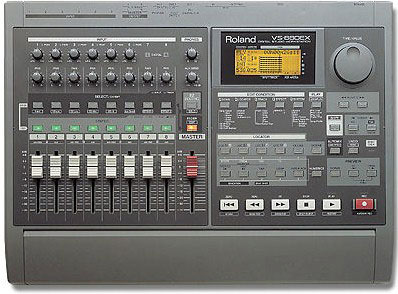
This website contains information on audio projects and digital recording. It is just some miscellaneous information I thought others could use. It will also cover some info on Roland VS digital, multitrack recorders.
For those with further interest in Roland VS multitrack recorders, a great website with highly active message boards is www.vsplanet.com
Another great site with FAQs about VS recorders is
www.ps139.com/vs880ex
(Commonly referred to as Hook's VS info page)
Some of the following links are just text files. If they don't open in Notepad (or Wordpad etc.), just select all of the text and copy it. Then open Notepad (or Wordpad etc.) and paste it. Then turn on the "word wrap" option if needed.
Use your browser's "Back" button to return here.
Kenwood KR6200 schematics and tech info.
Kenwood KR6200
Creating a Tremolo effect on the VS recorders with the ability to lock-in with the tempo:
Creating a tremolo on the VS
Here's a sample audio-clip of what it sounds like
Why to NOT use the "soft clip" in the Mastering Tool Kit in VS recorders.
"Soft Clipt" on VS recorders.
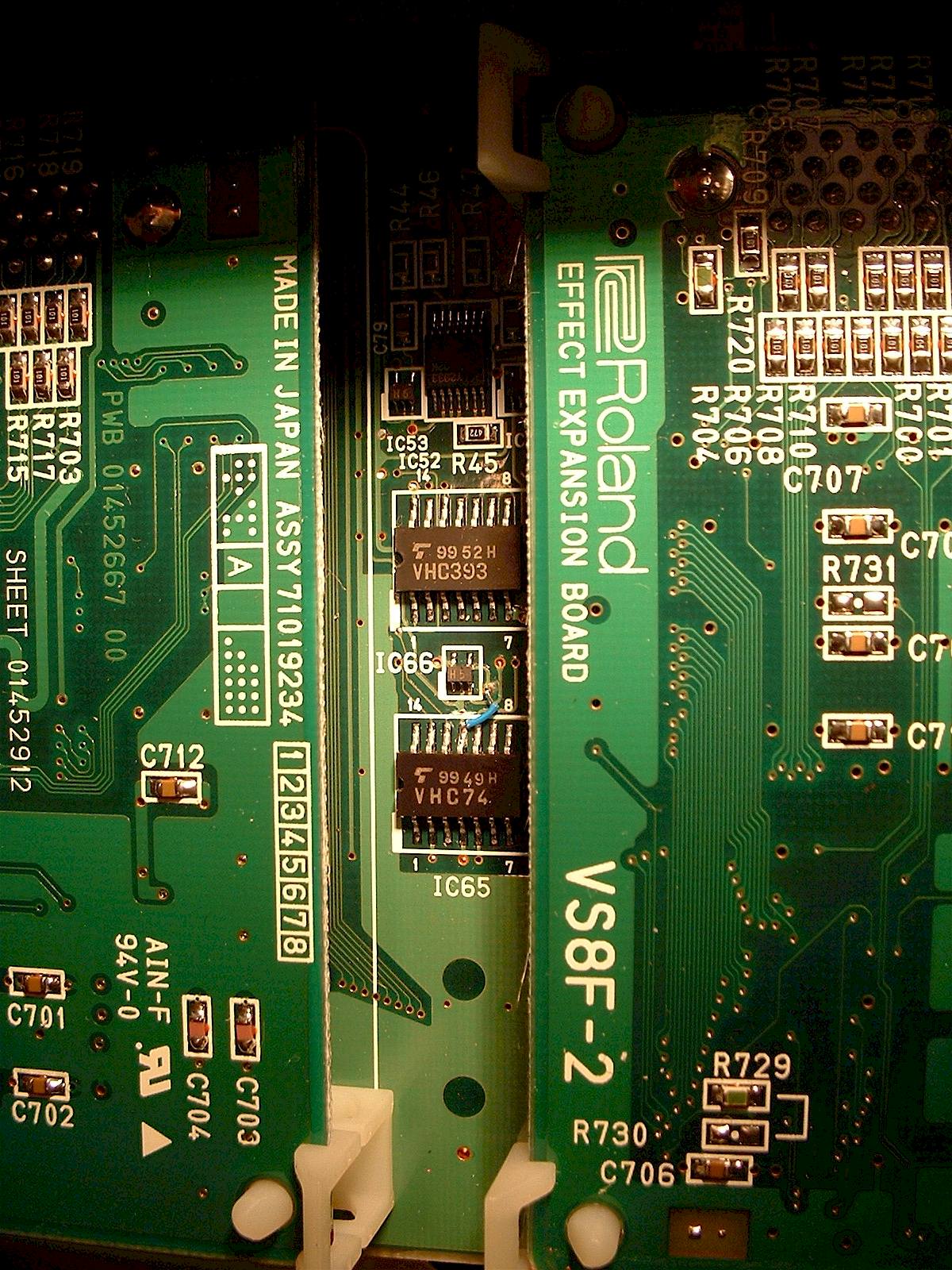
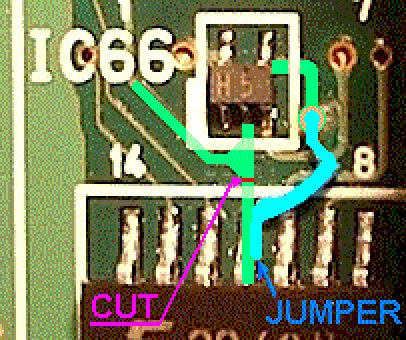
VS1880 Noise Mod. This is the Roland approved repair to get rid of the pops and clicks on the VS 1880 digital recorders. It is detailed in Roland Technical Document #101450. One trace gets cut. One jumper is added.
Photo of the completed repair by a Roland authorized service facility.
Closeup gif of the actual repair.
Description of "DC Cut" on VS recorders.
"DC cut" on VS recorders.
Determination of bit depths, on recording modes, of VS recorders.
Bit depths of VS recorders.
Op Amp modification for VS recorders as authored by "Slow Blow"... a member of www.VSplanet.com.
Op Amp Mod for VS recorders.
Pictorial layout of signal handling, in terms of bit depth and RDAC compression, for a VS recorder.
VS layout.
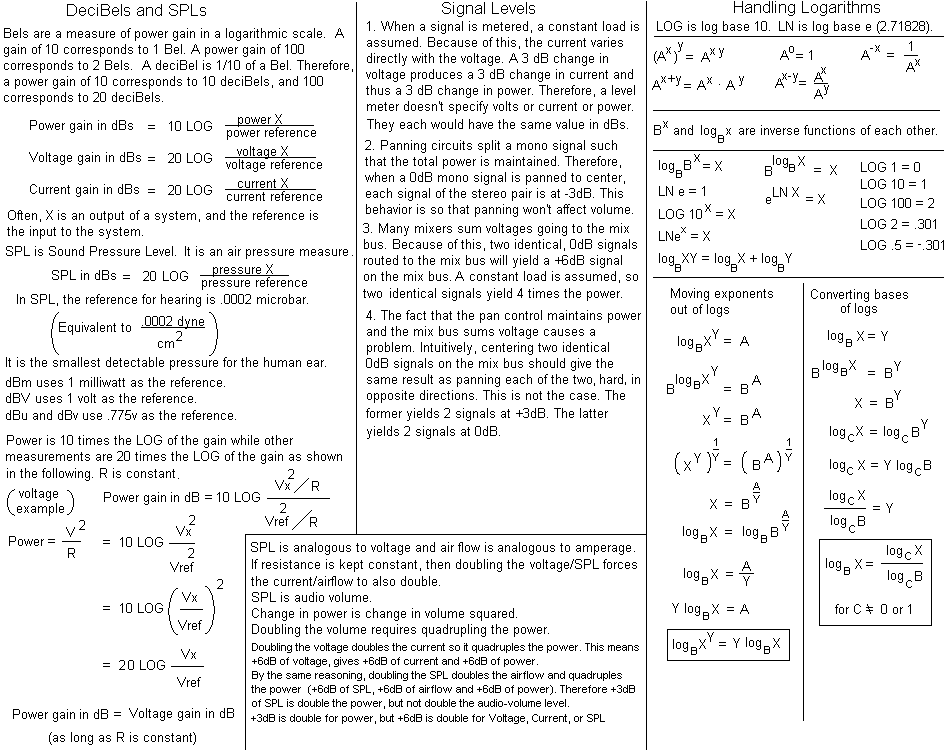
Some notes on dealing with SPL (sound pressure level), LOGs (logarithms), and dBs (deciBels).
Log, dB, and SPL notes.
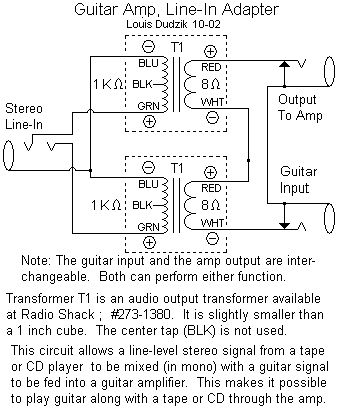
Designs for a converter which allows a stereo audio signal and a guitar signal to be fed into a guitar amp simultaneously.
Use it to connect a stereo cassette player and a guitar to your amp for learning songs.
Guitar amp input converter.
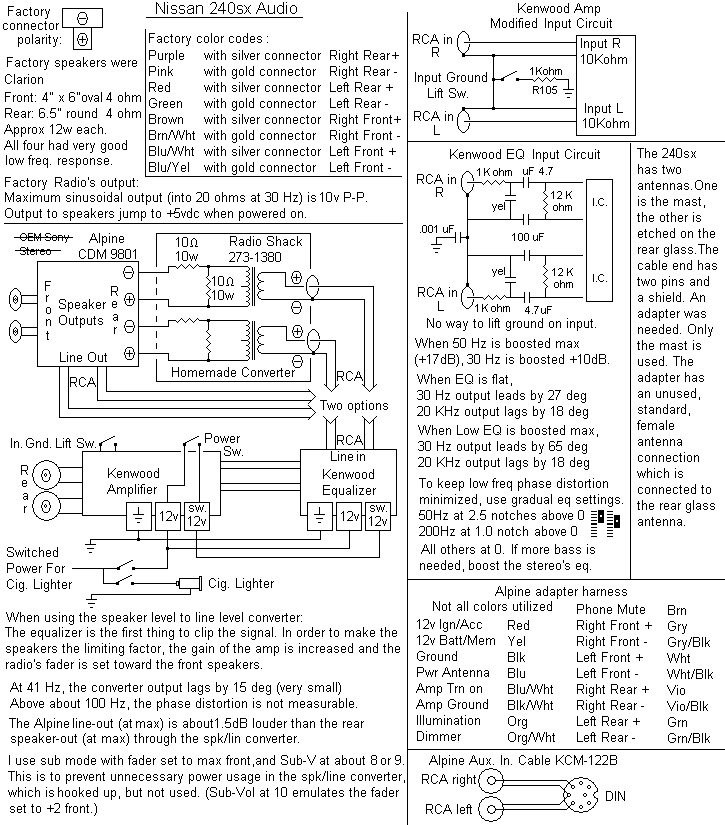
Designs for a circuit to convert speaker level signals to line level signals with common mode noise rejection and DC isolation. This is usually used for car audio systems with extra equalizers or amplifiers.
Speaker level to line level converter DIAGRAM.
Speaker level to line level converter DESCRIPTION.
Designs for a passive low-boost filter. It is based on Baxandall tone circuits. This can be inserted into a line-level signal path to boost the low frequencies. It actually attenuates the high frequencies by a constant amount (as a shelf filter).
Passive, low-boost, shelf filter.
Layout of the modified audio system for my '93 Nissan 240 sx.
240 sx audio system.
These next links are Qbasic programs. You must have Qbasic to run these programs. If you run them automatically, press CTRL & Break to stop the program. To get the screen to full size, you may have to press ALT & Enter/Return.
This program converts gain to deciBels and vice versa.
This program simply converts from decimal to LOG and vice versa.
This program demonstrates how any repeating signal (example is a sawtooth wave) can be represented as the summation of sinewaves. It allows you to decide how many harmonics are used to represent the sawtooth. The final summation demonstrates the effects of eliminating upper harmonics. (Incidently, it also demonstrates why a signal cannot contain a vertical segment.)
This program graphically sums sinewaves. You enter one sinewave's characteristics at a time (sin command) and store them in memory until you give the command to sum them. The final summation is then represented graphically. This is a learning tool for studying Fourier series representation of signals
This program is based on "sinesum.bas" (above).This is a learning tool for learning about odd or even harmonics etc. You decide which harmonics are summed together by entering the number of the harmonics one at a time. (Harmonic 1 represents the fundamental frequency.)
This program gives the fret locations based on the scale length (nut to bridge) of a guitar or bass. The distances are in inches (and 64ths of an inch). This program works best if you use a printer.
This program gives the frequencies of the notes in western music. I left it in the form of a program in case anyone wanted to alter it for pitch shifting.
DECIBELS.BAS
LOGS.BAS
SAWTOOTH.BAS
SINESUM.BAS
SINHARM.BAS
FRETS.BAS
(Tempered scale)
TMPRSCLE.BAS
I believe the information on this page is accurate, but there may be things I missed. Please E-mail me if there are any errors.
LouDhvx@Yahoo.com