This LWVPGH 1-minute video show actions YOU can take to counter disinformation!


Fact-Checkers


Media Bias Charts rank news sources for both accuracy and political bias. While their definitions of bias and accuracy are subjective, the best of these sites are very transparent about their process, and keep a public database of the articles that were used in the rankings. These charts are very thought-provoking, but are they useful in countering disinformation? Well, Yes, and No.
Yes:
Lateral Reading
Lateral Reading means using multiple news sources side-by-side to verify information. It allows you to take advantage of the research done by professional journalists who may have been present at the event, and who are able to interview key players and experts.
Check content using several mainstream sources that do original reporting.
People spread misinformation for a variety of reasons:
No matter whether the goal is politics, profit or pranks, all share the motivation to spread their messages as widely as possible. Our clicks, comments, and reactions help them to succeed.

LWVPGH 1-minute video on what motivates spreaders of misinformation and disinformation.
Misinformation Takes Advantage of Human Nature

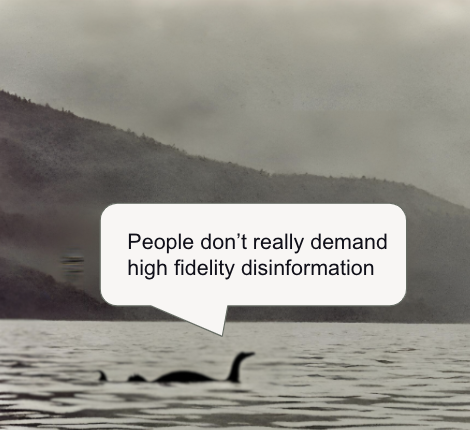
Deep Fakes: Rapid advances in artificial intelligence technology now make it possible to generate realistic photo, video and audios that appear to "document" disinformation. But “deep fake” AI does not really change the nature of the game much. Widely available photo, video and audio editing software have long made it possible to create similar, and often better, "cheap fake" documentary content.
The power of disinformation is rooted in human psychology, which means that AI troll-bots on social media, or public figures simply repeating false claims are able to spread lies easily without the help of deep fake content. Whether AI-generated or not, we can use what we know about human nature (above), and the strategies that follow (below) to counteract disinformation.


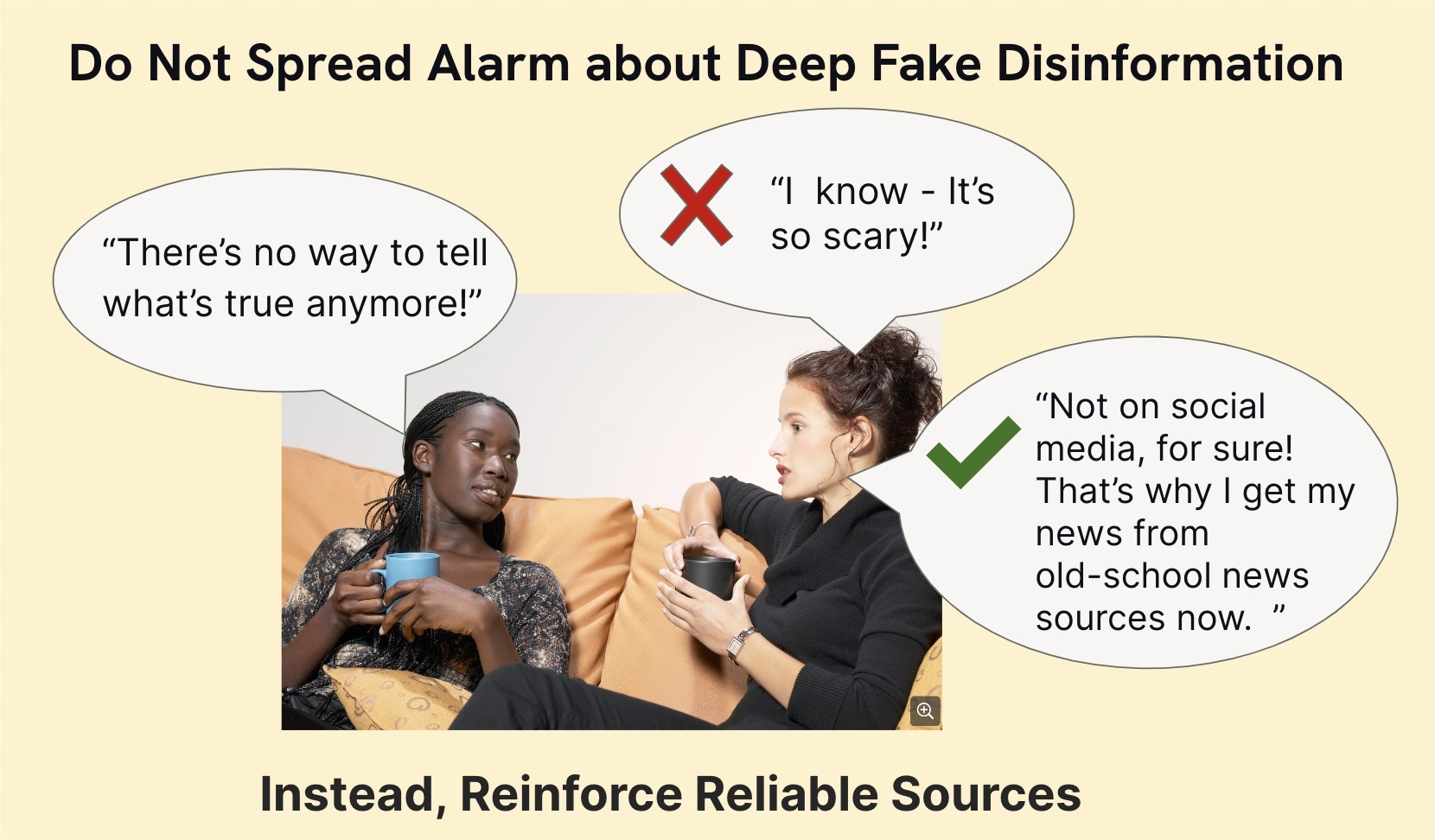
The Bottom Line: To counter the harmful effects of AI-generated disinformation, we need to avoid reinforcing the sense that it’s impossible to find the truth. Instead, we need to emphasize and model ways to verify factual information.
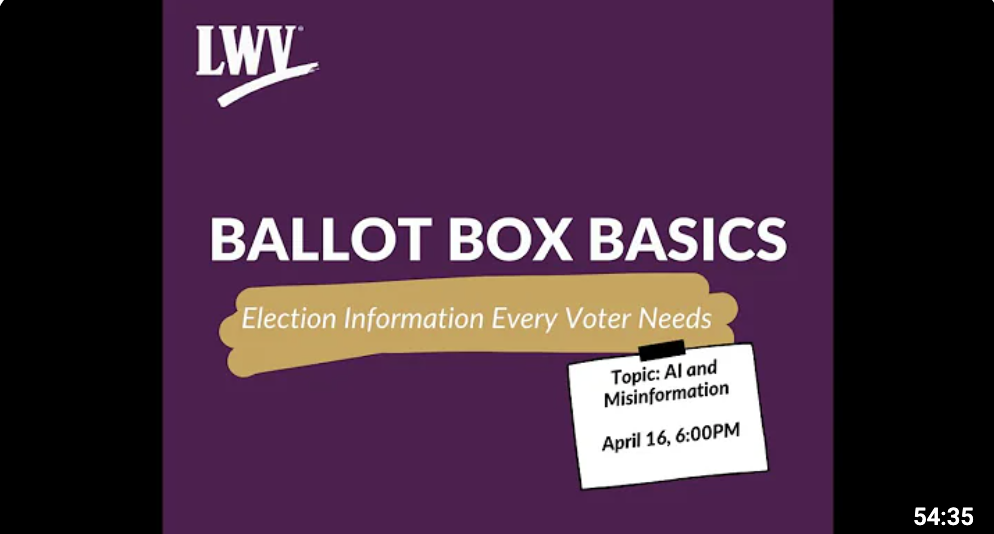
View the recording of our April 2024 presentation on "AI and Disinformation" here: AI and Disinformation Presentation
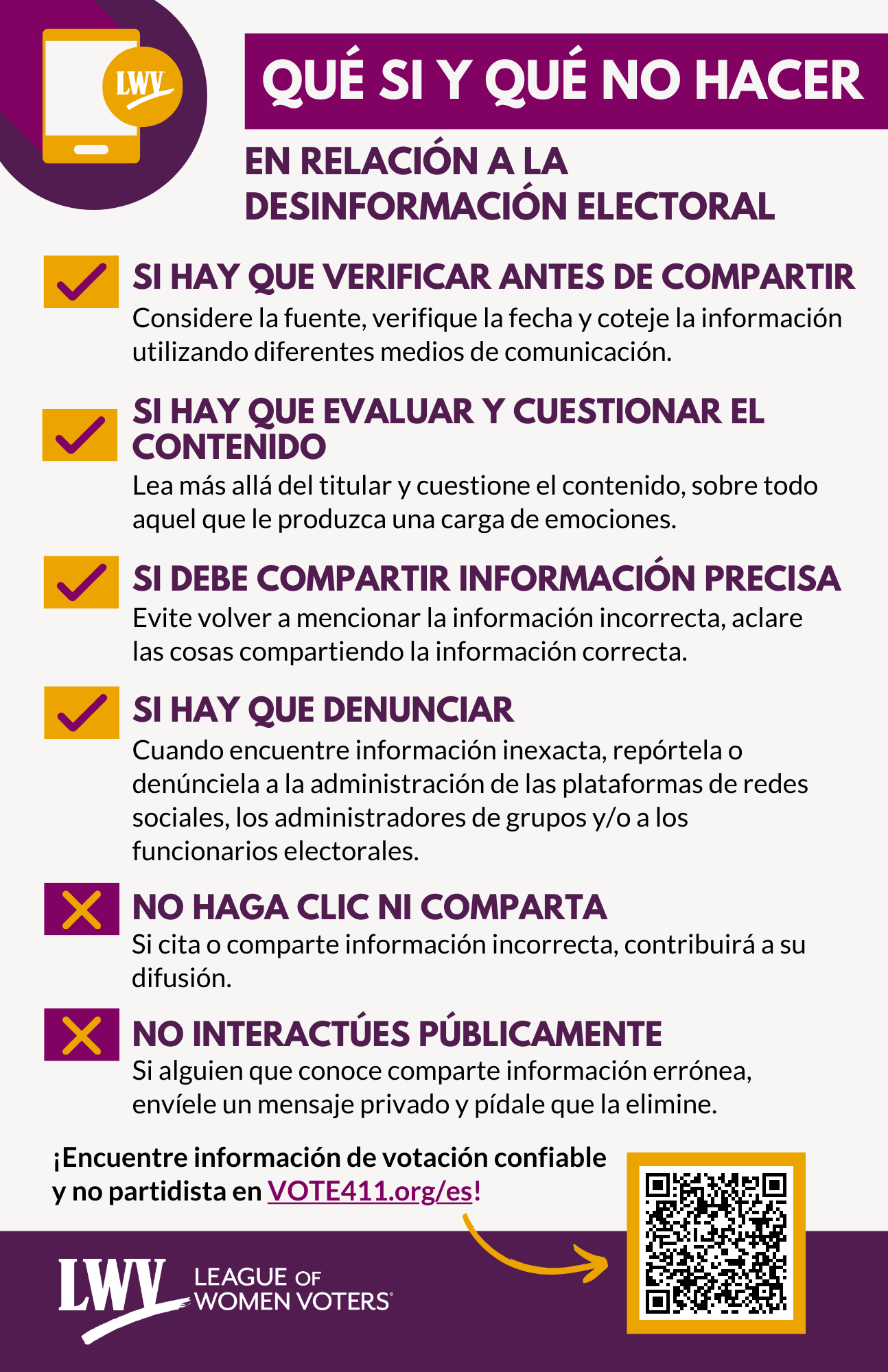
When we see or hear misinformation our first instinct is to argue and present correct information. This is almost always a bad idea, especially online. Why?
There are tips and resources for having civil discussions below.
This 1:30 minute LWVPGH video informs users to "beware of malicious bots" in their social media networks.
Sometimes it makes sense to respond to disinformation when:
When in doubt, go with Rule # 1 and Do Not Respond.

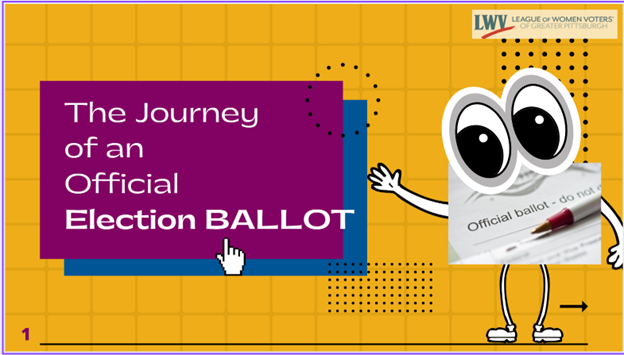
Journey of an Official Ballot VIDEO
Follow the "Behind the Scenes" before, during, and after journey of your PA ballot.
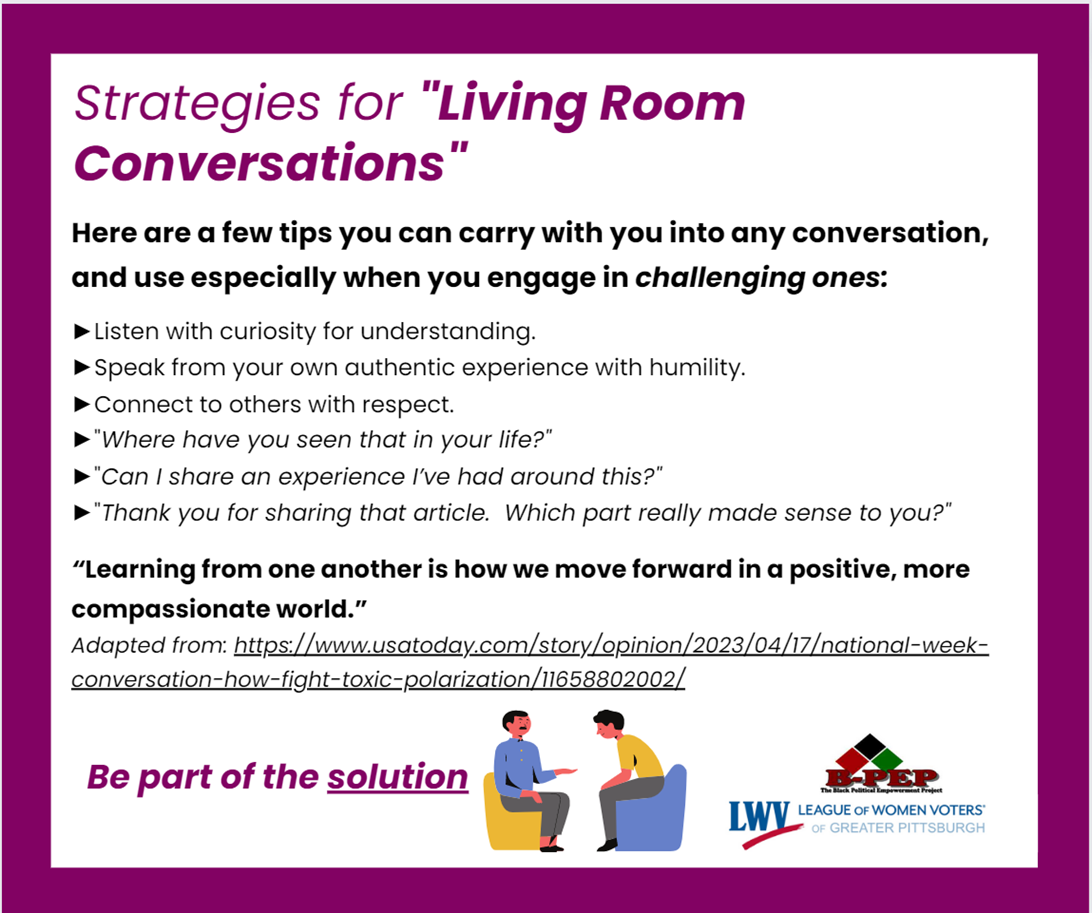
It takes practice to have the kind of conversations that promote mutual understanding and bridge-building. Several organizations offer online or in-person courses that offer valuable examples and practice in these skills. Some of the best links are listed below. All agree on a few main strategies for shaping the discussion:

Efforts to counter disinformation are concentrated on mainstream new sources and social media, and miss the targeted disinformation that spreads in some communities. Strategies to push back against targeted disinformation include:
At the most basic level, the First Amendment protects our speech from interference and punishment from the government. It doesn’t protect our speech from interference, punishment, or censorship from Twitter(X) or from Facebook, or in most cases, from a private employer. When we’re talking about protected speech, we’re talking about protection from government interference, not protection from anyone else who may disapprove of or want to penalize you for your speech. For instance, you can be fired, or lose membership in a club, or be expelled from a business for types of speech that are protected by the First Amendment.
There are a few types of speech that the government can regulate without violating the First Amendment:

The First Amendment and Social Media
While the goal of the First Amendment -- allowing for free and open exchange of ideas and opinions -- is a valid consideration for Social Media companies, ultimately, it is up to these private companies to create and enforce their own speech policies.

LWVPGH 1-minute video on what motivates spreaders of misinformation and disinformation.

This LWVPGH 1-minute video show actions YOU can take to counter disinformation!

This 1:30 minute LWVPGH video informs users to "beware of malicious bots" in their social media networks.

https://www.lwvpgh.org/docs.ashx?id=1151977
Find more in this series on our Explainers & Graphics page.
This presentation is a collaboration between LWVUS and the Algorithmic Transparency Institute (ATI) and aims to train members to recognize mis- and disinformation and help slow its spread. A slide deck, with speaker's notes is also available below.
This presentation is a collaboration between LWVPA and LWVPGH. A slide deck, with speaker's notes is available upon request.